

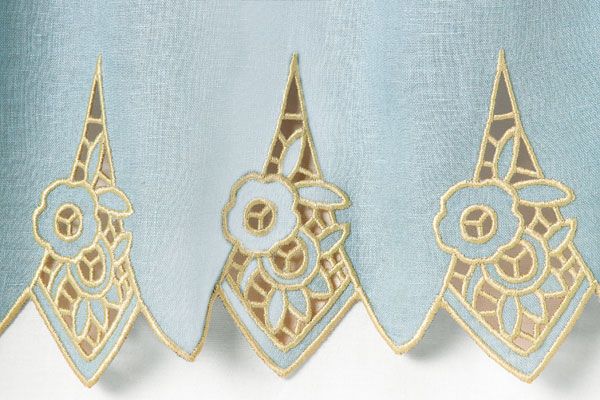
With the arrival of warmer weather, thoughts of eyelet and cotton lace with delicate cutwork style embroidery come to mind. Cutwork embroidery involves removing fabric from an embroidered design to create an airy look. Traditionally, this technique has required a lot of precise hand trimming, which is time-consuming and risky, too, because you’re cutting into work you’ve sewn.
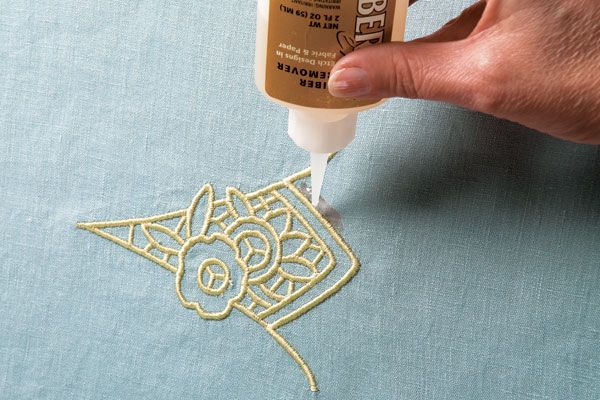
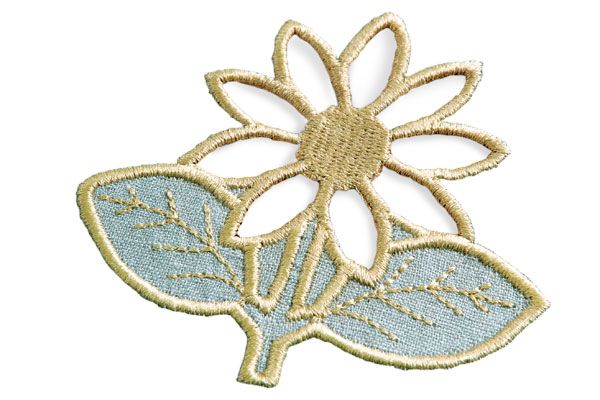
Today, modern advancements—such as Bernina’s Cutwork Accessory and Cutwork Software that cut and sew at the same time—are making it easier than ever to get the lacy look from your embroidery machine. But you can also easily remove fabric from your designs with Fiber Etch from Silkpaint. This fiber remover chemically melts away cotton, linen, and other plant-fiber fabrics. Using synthetic embroidery thread, you can embroider a plant-fiber fabric. Just apply a thin layer of Fiber Etch to the fabric that you want to remove, let it dry, rinse or brush it out, and watch the fibers disappear.
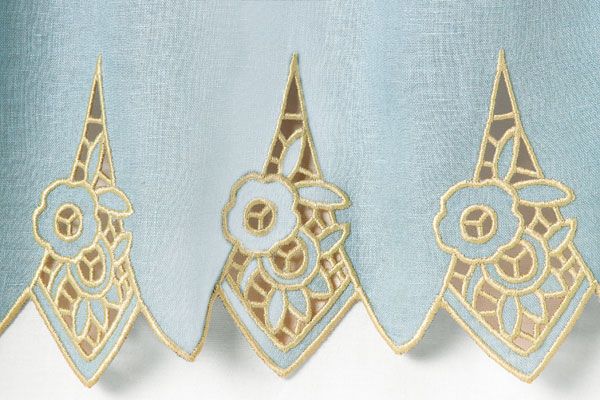
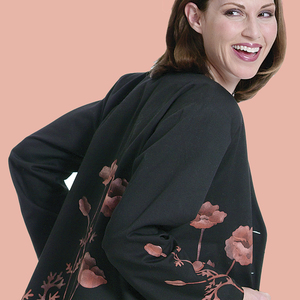
To achieve a look that is reminiscent of eyelet or lace, look for delicate cutwork embroidery designs. To get the most from your designs, experiment with embroidery thread colors. Choose thread that is the same color as the fabric for a subtle effect, or pick a contrasting color to pop the overall design. You can scatter the motifs randomly on the fabric for an all-over eyelet or lace design, or align them on the hemline to create a perfect border for a skirt, as shown here.
The stabilizer you choose can simplify your project. I use lightweight paper-based stabilizer in the hoop. Coffee filters also work well because they tear away easily after the embroidery is complete. Fiber Etch removes residual paper that’s caught in the embroidered edge along with the fabric in one step. When the cutwork is finished, you have a newly created designer fabric from which to make a skirt or top.
Cutwork without cutting
Making the right fabric and thread choice is key. Pick coordinating fabric and thread that works well with the Fiber Etch. Be sure to also prewash your fabric so the chemical isn’t blocked by any sizing. Then select a design, and you’re ready to begin.
1. Choose your fabric, thread, and cutwork design. Select a 100-percent cotton, linen, or rayon fabric. Fiber Etch dissolves only plant fibers, so don’t use it on silk and synthetic fabrics. Select a lightweight cutwork embroidery design for a delicate look, and using a lightweight paper stabilizer in the hoop, stitch it out in either coordinating or contrasting synthetic embroidery threads.

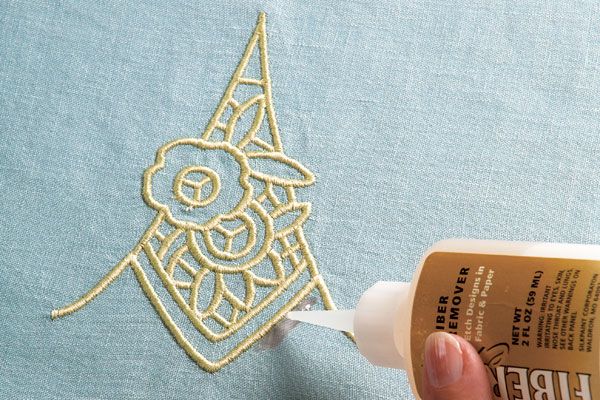
2. Treat the fabric. Apply a thin layer of Fiber Etch to the fabric you want to remove. If you’ve embroidered on heavy linen fabric, treat both sides of the design.

3. Dry the fabric. Use a hair dryer to dry the fabric quickly.

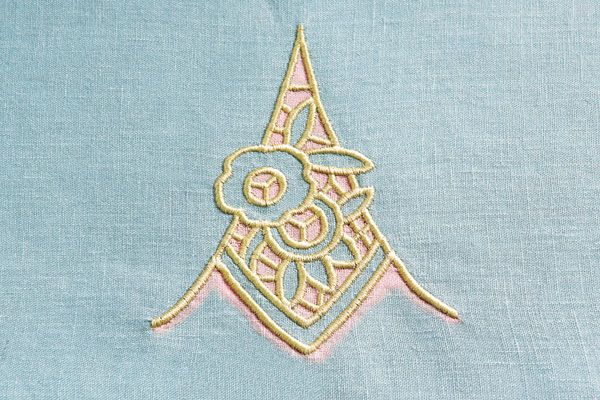
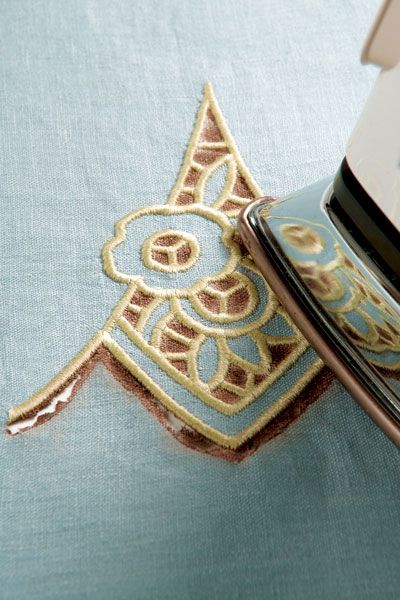
4. Apply heat. When the Fiber Etch is dry, apply dry heat from a hot iron for three minutes. The fabric will become discolored.

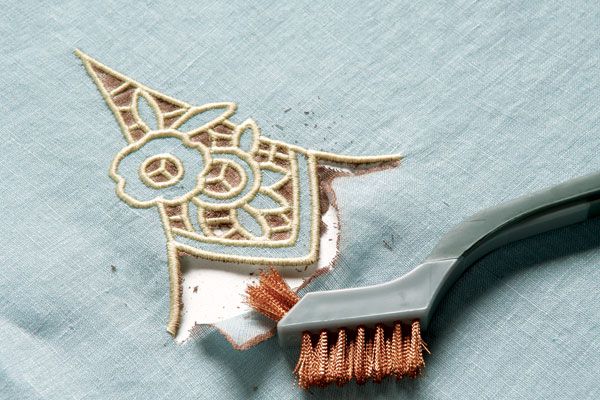
5. Brush or rinse the fabric away. If you’ve embroidered yardage, you can machine-wash the fabric in the gentle cycle to remove the unwanted fibers and bits of stabilizer.

by Jennifer Hasemann
excerpted from Threads #148, p.72









Fiber Etch isn't particularly new. It has been around for a while. And while it looks like they've done a really good job here, I've never been able to get it to work for me. I've had other friends that have also had real trouble with it, so I wonder what we are doing wrong.
Instead of actual embroidery, I'm wondering if one could "cheat" a bit and use, say, puffy fabric paints? Either before or after the material is dissolved away? Just a curious thought from one who doesn't own a fancy sewing machine!
I want to know why it doesn't "melt" the thread??
The thread is synthetic (polyester) or silk and the chemical solvent only works on plant based fibers. With that in mind, I would try using fabric paints too and see if it works with them. This looks like a media that could be very fun to play with!
Here's a website that has lots of info on this. It even has a video.
http://www.wwwearables.com/fiber-etch/index.htm
Before planning to etch a lot of fabric, try one small piece. My experience was that Fiber Etch did not work nearly as well as pictured in this article. I passed my supplies on to another who wanted to try it and she also was not successful in creating any useable cutwork.
If you can get the results as pictured in Threads article using Fiber Etch, please advise the rest of us.
I have no experience using the Bernina program and hope it is fantastic. I would gladly pay a Bernina owner to create bed linens with cutwork for me.
I just checked my Threads #138 issue, page 72 and this article is not there. Page 72 is the second page of an "Exploring Design" article. What's going on? I almost did not print this article for future reference because I thought I alread had it in the magazine
I'm going to hazard a guess on the "tried but failed" reports. There MAY have been some unidentified synthetic fiber mixed in with the natural fibers, OR the natural fibers may have been treated with synthetic chemicals that would make laundering easier, such as "iron-free" cottons.
Before undertaking a large special project like a tablecloth or a set of linens, try it out on a small piece of fabric, like a guest hand-towel, that has been SERIOUSLY washed and possibly rinsed with vinegar to remove any chemical residues there may be attached to it. REALLY check the labels of the fabric you buy - possibly check out your manufacturer on-line to see what they use to "finish" their natural materials. You would also probably be able to "smell" the finishers when you ironed the washed a dried fabric on a high setting, which is allowable for most cottons and linens.
Help any? It COULD even be done AFTER the fact (embroidering) where it failed before - try washing it again and THEN using the fabric etch stuff.
/j/
Hi there, I'm Annie and I've been using and selling Fiber Etch for years! Love it.
Let me see if I can help a bit (maybe :)) Fiber Etch works by completely removing plant fibers such as: cotton, linen, and rayon yarns. If you use a blended fabric - any synthetic, silk, or wool yarns, those will stay creating a gorgeous etched effect that looks almost like it was a part of the original weaving.
If there is any durable finish at all left on your fabric, you're going to have less then spectacular results. Fabric finishes do not allow Fiber Etch to permeate into the fibers of the fabric. It will remain on the top of the finish and simply turn the finish brownish when ironed, not contacting the fabric fibers at all. Washing will not always remove all finishes. So you have to be careful when choosing your fabrics.
Many poly-blend fabrics have finishes & the very colorful cottons have them too.
How to tell about the finish? Unless you're using specifically Kona (quilter’s) Cotton, or fabric purchased with the highest grade: PFP, which means "Prepared for Printing", testing a strip is necessary to ensure it is finish free. Better to take a little extra time and test - then screaming later. Been there - done that.
Secondly be very very very certain that your thread is 100% polyester - including the core. Otherwise you're going to eat through it and be seriously annoyed.
The good folks at Silkpaint sell Fiber Etch by the quart (think of doing lots of devore velvet project), but we offer it in 4oz bottles. The average user can make that last 6 months or more. There's also a terrific book by Iris Lee available (out of print now - but I stocked up).
Oh and if anyone is using a puffy paint product, you can use Fiber Etch with that too.
Hope this helped a bit.
Annie
Wildly Wonderful Wearables
http://www.wwwearables.com
I have used Fiber Etch and gotten the results shown in this article on prewashed, none name brand cotton fabrics. There are also recipes on the internet for mixing your own Fiber Etch using easily obtained (but unfortunately in large quantities) pool chemicals. I have not tried them though.
Hi Marionabs, The article is in issue #148, page 72.
If i wanted to incorporate this effect on some hand painted silk, do you guys think it would be ok to paint the silk first and then have the fiber etch work? or would you fiber etch and then paint the silk?
Thankyou soo much to Threads for posting soo many free tutorials. I've never seen this technique and it's something I will try after reading this.