
A New, Improved Seam Roll
Curved hardwood railing works even better than a dowel.
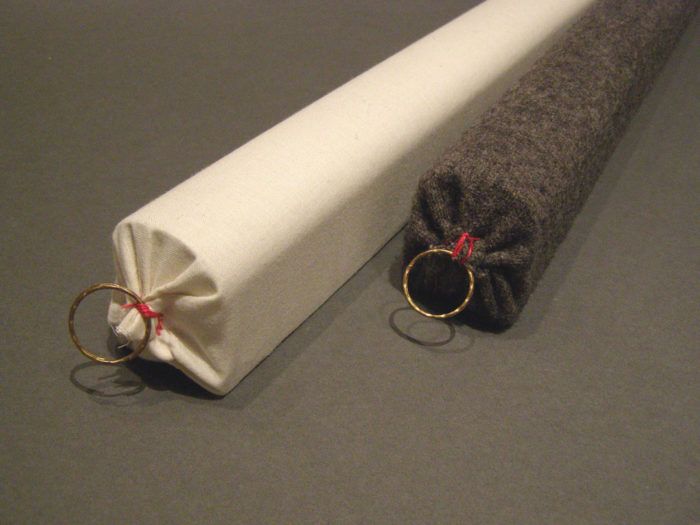
Anyone who has taken a class with me knows I like pressing seams over a seam roll. I’ve always been dissatisfied with store-bought versions: They are filled with packed sawdust and flatten out over time, in my experience.
I’ve taken to using a hardwood dowel to make my seam rolls. It is rigid, won’t compress over time, and can be made to any length. There’s one problem that purchased seam rolls and dowels have, however. They roll off the pressing table. This generally occurs at the time you need them most, and they tend to roll into an inconvenient place, also in my experience.
Recently, I was at a lumberyard with a friend who was renovating her apartment and was shopping for crown molding. As we were standing in front of the rack with all the molding samples, I spied a length of oak railing. Inspiration hit and I snatched that piece, insisting she needed samples of railing as well.
Railing is made in softwood and hardwood. Choose the hardwood railing, for durability and performance. The profile will vary slightly from lumberyard to lumberyard, but you want the curved shape at the top.
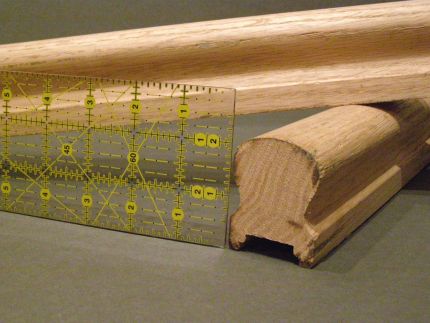
The feature I love most about the railing is that the bottom is flat. This means it will sit squarely on the pressing table instead of rolling off.
Have the railing cut to length at the lumberyard. I bought a 4-foot section and had it cut in half. This produced two lengths.
Cover one railing length with muslin, to use with smooth fabrics. Cover the second length with wool flannel, to use with wool fabrics. It’s simple work to roll some fabric around the rail. Stitch the fabric ends together…
Start your 14-day FREE trial to access this story.
Start your FREE trial today and get instant access to this article plus access to all Threads Insider content.
Start Your Free TrialAlready an Insider? Log in











I love that you've found another use for items we see in the hardware/home improvement stores! I love finding sewing tools in that venue. It really confuses the staff there too. I can't wait to make one of each for my sewing studio!
What a wonderful idea. So simple to make, yet such an invaluable tool. Bravo!
Great idea! You wouldn't need to buy new. You could get these at construction salvage stores or even if you or a friend is replacing one in your house. (You may want to strip any paint or stain, but it probably isn't necessary.) I'm thinking that an old, round doorknob might be useful, too.
Too funny, I have a piece of left over railing I have used for years for this purpose (also the flat side makes a good seam "pounder" when working with really stiff fabric that needs to be beat into submission).
What a great idea!! Thanks!
Terrific idea! I'm making one this weekend! I always fight with my seam roll as it takes a stroll right off the ironing board. No more! Linda S in MD
It's a smart man that can envision sewing tools in the hardware store.
Thanks–I'm going to use this idea!
Great idea... and the covered railing is narrow enough and short enough to work on an ironing board too!
I have had to make do and struggle with a tailor's ham and a rolled pair of thick wool socks on the ironing board to press the latest seams. The fully lined wool coat is almost completed.
The covered rail would have been wonderful for the long straight seams. The taylor's ham and socks took care of pressing the curved sleeve seams.
Hmmm... I wonder how we can make a curved seam roll for sleeves??
A pressing table sounds ideal! The hanging rings are a great storage idea too.
I hope you get a lot of enjoyment out of using them...
Fabulous! When I began crocheting and knitting, I appropriated my "seam roll", a piece of 1 inch dowel rod, to use as a nostepinne for winding yarn balls.
So I went back to using my old commercial sawdust roll for the past three years. I was wondering what wood moulding would work better than the dowel rods, and you've saved me some work! Thanks!
I already plan to replace the make-shift yarn winder with a tapered spindle and a finial for a handle (sanded and waxed).
I guess stair rail parts make the best DIY craft tools!
Thank you much for this tip. I'm fairly new to fashion sewing and just getting the tools I need, so this idea will save me from buying something that might be more frustrating to use. I'm sure I can find some beautiful fashion fabric to spend my savings on.
Kenneth love this seam roll - how many layers of muslin are used? I'm thinking it needs to have more padding than just a single layer of fabric. Appreciate your great 'tricks 'n tips' to say nothing of astounding techniques (which I can only admire but never achieve). Congratulations to all connected with Threads! Joan, Australia.
About 45 years ago I rolled up a large magazine and rolled a dish towel around it, stitched it in place and have been using it for all these years, and wondering why I didn't replace it. Now I know why--I needed Kenneth King's wonderful idea! Can't wait to get to my lumber yard!
>>>Hmmm... I wonder how we can make a curved seam roll for sleeves??>>Kenneth love this seam roll - how many layers of muslin are used? I'm thinking it needs to have more padding than just a single layer of fabric.<<< There is a fuzzy-napped fabric with a reflective fabric on one side, used for making replacement ironing boards covers, approximately 1/2" thick. I think that would be excellent backing underneath - and I've got all 3 components here right now. THX!!!
>>>Hmmm... I wonder how we can make a curved seam roll for sleeves??<<< Somehow I deleted my first comment - - oops!! There are curved sections for stair hand railings in a multiple range of configurations of degrees of curves and angles. Check out your DIY shops for one that suits your sewing needs.
this is brill. I'm off to the next hardware store.
An excellent idea: just hope I can find the necessary rail in southern France where I live. Anyone know where to look here?
I love this! And, since I also work with doll clothes, I can make one in a smaller piece for their clothes, too.
Thanks for this tip! Wow!
What a great idea!! Off to the lumberyard I go. I would love to know exactly how you covered it! Thanks Cindy
http://www.cynsew.com
Sorry, I didn't see there was a page two. Thanks so much Kenneth! You are my absolute favorite designer!! Cindy
http://www.cynsew.com
You are the king!!! Thank you for sharing.
Hello!
As for the question of how much padding--none. I prefer it very hard as opposed to with padding, as one gets a really flat seam that way. As to the padding for the ironing board that has the reflective surface....also no.
The purpose of these tools in addition to being a pressing surface, is to draw the heat and moisture through and away from the fabric, for a good press. The coverings with a reflective surface work counter to that, and don't give the same results. If you want to cover it with a bit of padding, one layer of cotton flannelette underneath the muslin will be just the ticket--natural fibers will do the same as the wood, because they, too are cellulose, as is the wood.
This is just like my stair rails ... which we've had for 36 years. Can't believe I missed this. Off to the lumber yard!
For those that might look for a reclaimed piece of railing ...suggest that if you look there you look for a piece of railing that has never been treated with paint, varnish et al. Even though the wood might have been stripped, there may be removal residue in the wood that could heat up and produce fumes in the steam. For that reason I recommend bare, untreated wood. I was the one that could put the best crease in my dad's work pants. He was an old Army guy who worked in an oil refinery. No matter how well we maintained the ironing surface with regular pad changes and cover washings - the petro fumes stayed in them (and in his work clothes). 45 years later, petro fumes will send me into a asthma attack. Go for the new wood, it's worth the extra dollars.
Great application of Occam's razor!
This is a fantastic idea...
Thank you Kenneth
What a great idea! Thank you for sharing.
I have a collapsible tailoring board that I bought 35 years ago when I took a tailoring class in college. It's a great tool to use to press the seams on armholes and cuffs and in other curved places. They still sell them but at a hefty price of $60 to $70. You might find a used one on eBay,or, if friendly with a woodworker, have one made for you. Put "collapasible tailoring board" in a search engine and you'll find sellers.
oops, I forgot to thank Kenneth for this brilliant idea. I'm stopping by Lowe's on my way home from work tonight, and I've passed this hint along to friend who sews.
Very creative idea indeed! Thank you!
We had a trip to Lowe's planned for timber to make a raised bed for the garden. Now I will also purchase a length of hardwood hand railing and make myself a seam roll for pressing. Ingenious idea!
Wonderful. I have used a roll for years, but it is bigger and sometimes harder to use than I think this one would be. However, I question whether just putting the muslin or wool over the wood will work well if using steam. Do you think a layer of cotton flannel under the covering might be a good idea?
Great idea. What about using that cotton lining fabric that is lining and interlining in one. I makes a heavier layer, and unlike 2 layers, won't wrinkle
I used a leftover section of railing for a good while, but didn't cover it. A friend gave me a "seam stick" and I retired the rail.
Brilliant! It will fit really well on a picture rail on my wall. Thank you once again!
Kenneth: I made two of these seam rolls after my old original roll looked like a flat tire. One was 24" and the other was 42" to use on the sideseam of my slacks. One thing to look out for, make sure you buy hardwood, not pine. Large dowels are often pine and I've also seen railings in pine. The resin will bleed through with use.
wow this is news to me. So that is why my friends in England press on wooden tables! And here I've been struggling to get the perfect press on quilt pieces etc. by putting more not less padding on my wooden ironing board. I feel ignorant, like reinventing the wheel. Thank you for putting us straight ...and flat...and neatly pressed.
wow this is news to me. So that is why my friends in England press on wooden tables! And here I've been struggling to get the perfect press on quilt pieces etc. by putting more not less padding on my wooden ironing board. I feel ignorant, like reinventing the wheel. Thank you for putting us straight ...and flat...and neatly pressed.
great idea! thx for sharing :)
Great idea! Just the ticket and I'll look for the right stuff at my local lumber yard today!
What's wrong with the old style sleeve board? mine made by my father for my mother circa 1939/40 an old cantilever style, has never shifted off my ironing board and apart from a renewal of the cover about 20 years ago is still fit for purpose. Some padding is necessary I don't accept that a hard surface will connect and work with an iron!
Other items can be pressed by using a rolled up towel -- for us amateurs saves storage and clutter!!!!
In response to Stillsewing: I adore my sleeve board, and it's never far from my pressing table. I also use this seam roll on top of the sleeve board id I want to get most of the rest of the garment out of the way for pressing. It has about 9 inches between the foot and the board, so I can get quite a bit of a garment between the two layers. It's not collapsible, but that isn't quite an issue with me, as I leave all my working tools out.
As for questions about covers and padding: As I said earlier, I prefer no padding and just a cover, but pad with whatever you like, as long as it is a natural fiber. Wool woks as well as cotton.
And the comment about hardwood railing is very good--I use hardwood, because it won't flatten out, but didn't know that with steam, that the pitch will bleed from pine or other softwoods. But it makes sense.
A further comment on padding: I do pad my pressing table, and sleeve board. An old wool blanket, single thickness, is what I find works best. Others prefer more padding on their pressing tables, but yes, the flat surfaces need padding.
But as for the seam roll, I like the hard surface, to get a flat seam without running the risk of embossing the seam allowances into the fabric surrounding the seam. I did some experimentation when I first learned of a seam roll. I was not a fan of the sawdust-filled one as it flattened out, and when I was using railing dowel I arrived at this preference for no padding, which, is just that--a preference--not carved on stone.
I'm glad you all are enjoying this post. We felt you might like a break from the opus fantasy fur jacket!
I have used a length of very stable cardboard tubing, maybe 1 1/2" diameter; no idea now where it came from, with a single layer of old terry towelling diaper made into a tube. I was able to sew the seam then stitch the one Seam Allowance down over the other (slightly trimmed one) to make a primitive Run and Fell Seam. Turned inside out and slipped over the tube I simply rolled the ends down into the middle of the tube.
By using the doubled Seam Allowance area I have a 'stop' that keeps it from rolling.
I also have a much bigger tube; came with fabric wound around it, covered in the same way; use this one to press flatter seams/straighter seams. It is also longer than the narrow one, which is 18" or so.
Liz P.
I have been using an old Life magazine rolled up and covered with muslin, but after seeing your idea--I like the extra long lenght--I'm going to ask my husband to get me some molding. Thanks for the idea.
What a fantastic idea! Extremely useful, relatively inexpensive and customizable ....... WOW !!
What a great idea! A tip: what is shown is what is called a plowed rail (it has the hollow, or plowed out, area in the bottom of the profile). You want to use this style. There is an unplowed style, with basically the same profile, but is not hollowed out in the bottom, and it is a little narrower. Because the unplowed rail is a little narrower, it can rock and tip easier than the plowed rail.
Love all your hints, I have so much fun trying everything under the sun to that I get the best of it...thanks all for sharing.
Beautiful idea! Thank you.
thank you.the best seam roll i have ever used.i was using a rounded off piece of 4 by 4,but this just so much better.
thanks again.
Brilliant and sure beats my one inch dowel! Now, where did that roll off to?
Looks like "the King" has done it AGAIN! What a great idea this is! If people are interested on odd-shaped wood pieces, they might want to check out a hobby shop in town here (Guelph, Ontario, Canada) called "The Stockade", whose specialty is unpainted wooden objects, and I know they have all different shapes of wooden thingies that could serve as ironing tools... and they have a catalogue and a website. People might want to check it out for odd-shaped wood bits to use in this fashion.
I love how your mind works! This is such a great idea, thanks! I'm going shopping for a piece of railing.
Just made mine today, I had to shop around to find the right rail, but managed to find it and hay presto!!! mine looks great!
I knew one day that leftover piece of stair railing would come in handy! Just sad I didn't think of it first. Thanks
Genius! I'm on the way to HomeDepot! I was using rolled up newspaper that never last long.