

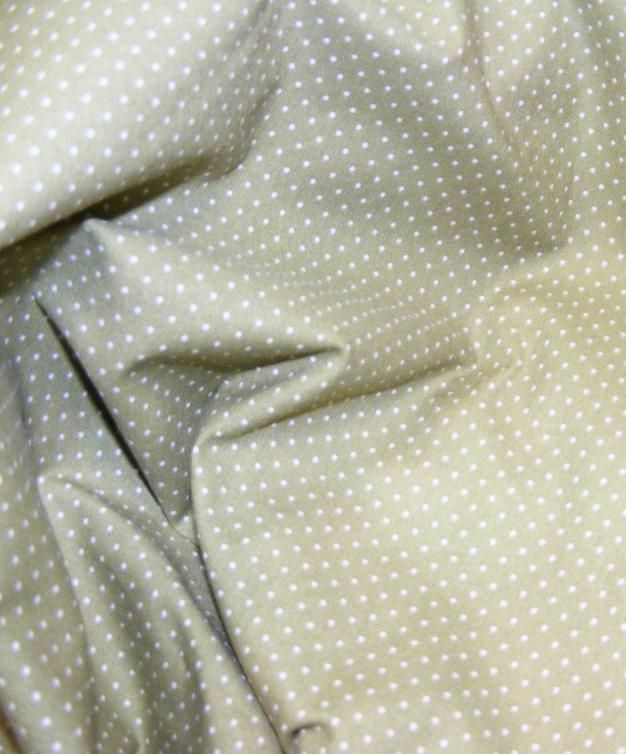
I am most fond of fabrics made with cotton fibers.
I LOVE FABRICS MADE FROM COTTON FIBERS
I have very strong feelings about my favorite fabric. I suspect when I was a child, I enjoyed rubbing a cotton blanket, or perhaps I felt comforted as I stroked the pima cotton sheets while falling asleep. Otherwise, why would I have such a strong attraction to anything made from cotton fibers? I love the feel of it on or against my body, and I love the touch as it travels along my sewing machine bed. No other fiber appeals to me in the same way. I love all cottons. I dislike any fabric that’s slithery–most fabrics made from silk and fabrics with similar qualities are not appealing to me. I’m allergic to many wool fibers, and they make me itch. My colleagues at Threads have attempted to change my mind regarding cottons, but they’ve been totally unsuccessful!
OUR CONTRIBUTORS HAD VARYING RESPONSES
We asked the authors featured on our “Contributors” page in the current Threads issue (no. 155) “If you could sew with only one fabric, what would it be?” The authors featured were Pamela Leggett (“Flatlock for Fashion”), Kathleen Cheetham (“Sewing Destination: Vancouver, BC”), Christine Jonson (“Create a Carefree Summer Wardrobe”), and Barbara Emodi (“Go to Great Lengths”). One chose silk; one opted for cashmere; one selected knits; and another, like me, loves cottons. (You’ll have to read the “Contributor’s” page to see which author selected which fiber.) I thought it was interesting that without prompting or direction from us, they each selected something totally different. It just shows that we all have strong preferences usually for different reasons.
THERE’S A DIFFERENCE BETWEEN FABRIC AND FIBER
A subscriber who had already received her issue, Sarah Colley Jones, County Extension Agent in Panola County, Texas, wrote to us to express concern because we didn’t clarify the difference between a fabric and a fiber. Sarah pointed out that there is actually a fundamental difference between fiber and fabric. Silk, cotton and wool are fibers, while charmeuse, batiste and worsted are fabrics. The same fiber can make several different fabrics, such as cotton jersey, cotton denim, or sateen (cotton woven using a satin weave). Likewise, the same fabric type can be made from different fibers, such as satin which can be made from polyester, silk, rayon, and various other fibers including wool. In the United States I think many of us have come to use the names of fibers and some of the fabrics made from those fibers interchangeably.
FIBER, YARN, FABRIC–THE TERMS ARE NOT THE SAME
The terms fiber, yarn (or thread), and fabric actually refer to textiles in different phases of production and development from the basic raw material to the finished product. They are all the same thing, but they are nothing like each other. If used correctly, the three terms are not interchangeable.
FIBER
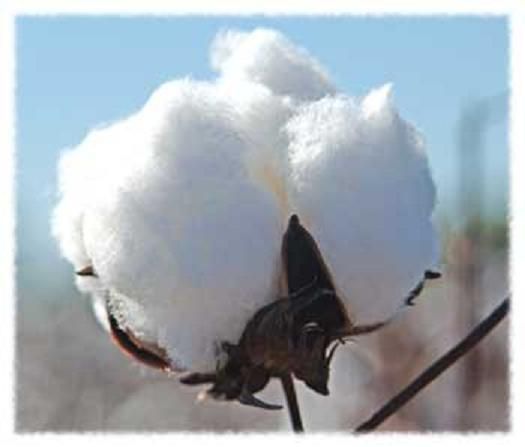
Fiber is what fabric is made of. The fibers can be plant, as in cotton and linen; animal, as in wool; insect, as in silk; or man made, as in nylon. Fibers start out as cotton bolls, wool fleece, polyester rovings, rayon linters, etc. They are all simply clusters of fluff with little substance. By themselves, fibers have little tensile strength and can’t be used for much more than stuffing a pillow.
YARNS OR THREAD
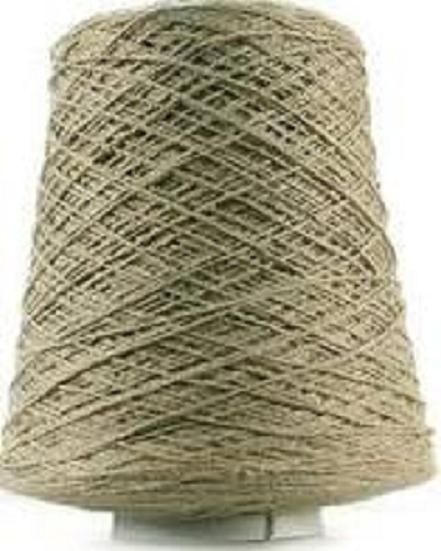
The production process begins when yarns are spun from fibers. When fibers are spun, they become stronger. A machine mechanically draws out the fibers and spins them into long fine strands. When several strands of spun fibers are twisted together they form yarn/thread. Yarns can be so fine as to be measured in micrometers (finer yarns are commonly referred to as thread), or it can be as thick as bulky knitting yarn.
FABRIC
Next, the yarn goes to the mill where it is woven or knitted into fabric. Fabric is the finished product. It’s sold on rolls, cut and sewn into apparel, curtains, bedding, etc. When fiber’s production process is complete, we sewers find inspiration from the resulting fabric.
What’s your response to our question: If you could sew with only one fabric, what would it be?









Personally I love wool crepe, silk dupion and tana lawn.
It's wonderful when you match the perfect fabric to the pattern.
Pashmina is a fiber, not a fabric. It comes specifically from Pashmina goats. Originally, only wool from Cashmere goats could be called Cashmere. I believe in current terminoloy, wool from Pashmina goats and a couple of others may be called Cashmere, but only that from Pashmina goats may legally be called Pashmina.
That said, recently I saw some really tacky rayon and acetate scarves for sale at a store, that were labeled Pashmina as a brand name!
Only ONE fabric??
It would have to be silk fabric.
I love the feel of silk and how it can be very light and fine or quite heavy depending on the way it was woven. I love silk's sheen, the way the fabric's brilliant clear colours dance with the light and how silk is cool in summer and warm in winter. I love the feel of my Thai silk skirts and the different weights the fabrics were woven into. They always look smart and are easy to care for... a delicate wash and spin and hang out to dry. Little ironing required. I do have to be careful the patterned weave doesn't get caught on rough surfaces though.
I have worked with Dupion silk fabric doing silk ribbon embroidery and the finished projects are so beautiful. Friends asked me to make them Dupion silk ring cushions with silk ribbon embroidery and beading for their weddings when they saw the "hope chest" wedding cushion I'd made. The fabric's crispness made pleating very easy. It was easy to handle and did not slip or run away. Dupion Silk worked well with the embroidery hoop and also pressed nicely.
Silk's down side would be the way it can crush or go limp with handling, how it shows watermarks and spots and not all silk is non-drycleanable.
It is still a fantastic fabric though.
Make mine linen! I love the way it responds to my needle. It is a wonderful canvas for all sorts of stitch embellishment from pulled threads to hemstitching, etc. I like its wrinkles and I like it crispy. Just my favorite. I don't think I have ever made a linen garment I didn't wear to death and love.
While I can't imagine EVER restricting myself to only one fabric (say it isn't so!!), for the sake of mental exercise, if I had to choose [gun to my head] it would be jersey.
A soft, versatile knit, I'd satisfy my need for variety by working with jersey of different weights, and different fibers.
A substantial highly-plied cotton jersey would make cuddly, warm, nicely insulating clothes for winter -- everything from long john's to a heavily interfaced and lined suit could be made of cotton jersey. Lighter, softer cotton jersey would make knit tops, and floaty pants and skirts for summer wear.
Luxurious silk jersey would make wonderful nightgowns, panties and diaphanous evening dresses; and would probably be the staple in my wardrobe.
Wool jersey could be sewn up into tops (lightweight jersey), pants (heavier jersey) and quilted into blankies that dare the Winter Winds to chill us!!
Ah! I love a well-knitted jersey!
Velvet, silk and linen are my favorites fabrics, and add to that as long as they are the color of wild spring violets that appear in the lawn at the beginning of the season.
I love to sew Tafetta.
I love cotton, too, but I couldn't limit myself to just one fabric or fiber either. I like the feel of freshly starched cotton. I love muslin so much, I buy it by the bolt, different kinds and hoard the good stuff. I use the cheap muslin to experiment with making patterns and save the better quality for backing fine delicate cottons or linen. I love all kinds of quilting cotton, even the ugly ones. Everything works if you cut it up small enough. I love broadcloth for dog coats with a nice knit fusible interfacing. I love to embroider on duck cloth for aprons and bags - I mean bags for tents and other things that come with flimsy nylon bags that never fit. Denim and canvas are fun, too. I'm not sure about seersucker. Is that even cotton?
Batiks! The colors excite my imagination, they iron beautifully and rarely shift or stretch in the sewing process.
I love any fabric that's not slippery! But, my favourite has to be linen- any colour,any type, but especially handkerchief linen. And Polarfleece-could eat-it in beautiful strong colours...And microcrepe for swishy pants....And cottons with sweet patterns...And...And....
What a question! So hard to decide! I love to sew with linen and silk noil(spelling?). I love wool coating and flannel. I like the way these fabrics respond to the steam iron, like sculpting with fabric. My only hesitance would be my worries about how animals are treated in the production of wool and silk.
I love all fabric, but I am especially drawn to Rayon, Cotton/Rayon blends particulaly. I love the feel of the fabric and the drape. It is a very versatile fabric. A rich Cotton/Rayon blend dosen't feel heavy in the summer and makes a great blouse. Not all Rayon is Hawaiian prints.
Based on what i buy, i would have to say silk. i can spot a silk remnant from a dozen paces and have bought pretty much every one i ever saw. when i was working i would make silk tanks to go under my suits and each side of the tank might be made from a different piece of silk...i always left my jacket on so i could double my wardrobe of 'little silk tops' pretty easily. it is slippery and therefore hard to cut, and needs it's own pins to avoid holes and requires twice the time to sew up because of it's likelihood of moving while you are trying to get from here to there on a seam....but what can i say? I treasure every moment i get to wear it and it is not possible to buy silk tops for someone as tall as i am so... i have no choice... love that silk!
I would have to say that my favorite fabric is velvet. Yes, it's a pain to cut each piece separately, and I'll admit that it crawls when you try to sew it and you need a walking foot and a zillion pins, if not hand basting, to make it behave itself. But oh, those colors so rich that you can see them vibrate with living light! Oh, that luxuriously sensual feel when you handle it! And never forget the glory of wearing it! Dressed in velvet, you are the center of the universe and anyone fortunate enough to behold you arrayed in full panoply is your worshipping admirer.
There are many fine fabrics available today: silks, satins, taffetas, fake furs, brocades, chiffon as light as air, crisp linens, even cottons in designer prints,and many more, and I love them all. But for me, the queen of all fabrics is velvet!
I love rayon, cotton, and rayon/cotton blends which have a lovely drape and are cool all year round.
I can't stand synthetics, they're too hot, they just don't breathe.
I love silk too but can't afford it and its just not practical in my life, neither is wool.
About the only synthetics that I do like are specialty fabrics like polar fleece, Minky, Ultrasuede, satin, and nylons and other synthetics that can be used in throws, jackets and outerwear.
Unfortunately, my one and only fabric store carries mostly nasty polyester.
My favourite fabric would be Thai silk, followed by hemp silk, and Romanian hemp.
My favorite fabric to sew is linen. I love how it responds to stitching embellishment, whether by hand or machine. It is a perfect canvas for drawn thread work, madeira applique, smocking, and so much more. As a child I was taught techniques like hemstitching on linen. That learning adventure was pure joy and that memory has been reinforced many times over the years. To love linen is to also love its wrinkle and I don't apologize for that!
I can sew any fabric. So I love to sew any fabric that will give me the design-look I am after. But if I have to choose, it would be a rayon blend. The drape and feel of this type of fabric is awesome as well as easy to clean.
I know it's more difficult to sew, but I like to sew with Marine Vinyl. I know I'm odd, but I like the durability of the product.