

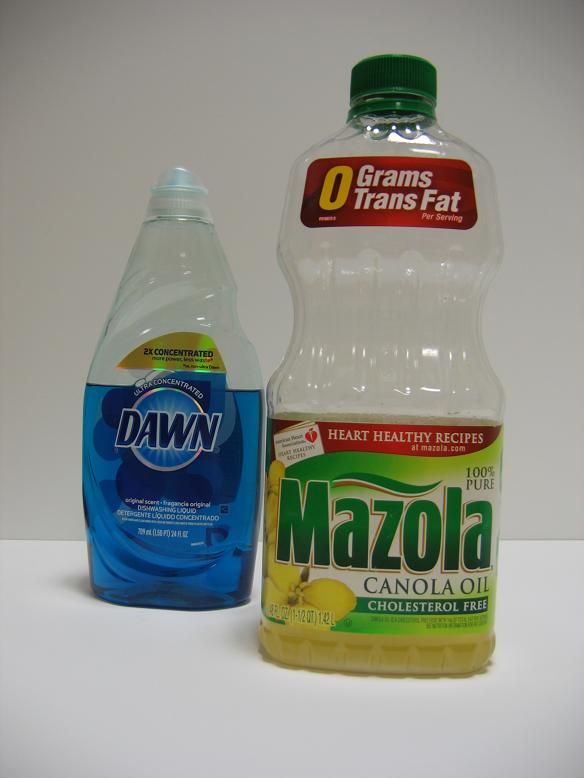
Stop by the kitchen on your way to the laundry.
I’m often getting calls and emails about removing unusually difficult spots. My first major crisis was when, as a young bride, I spilled a can of ebony stain on the pale yellow, wall-to-wall carpeting in our brand new apartment. I frantically attacked the damage before my new husband could see it. I had no idea how to get it up. I blotted with paper towels, but nothing helped the spot. It just seemed to get bigger and darker. (This spot was about two feet in diameter.) I had used Goop hand cleaner to clean the stain off my hands so I tried it on the spot and it worked! Let me warn you, however, sometimes a cure can be a curse. For the next two years every speck of dust within a mile of our home found that greasy Goop spot and stuck.
Recently a colleague emailed, “My wife wore a fleece jacket to a bead show and forgot to remove her adhesive-backed name tag when she threw the jacket into the wash. It was washed in cold water and hung up outside to dry. I noticed the mess when I went to put the jacket away. The paper name tag is gone, of course, but the adhesive remains (and is even still tacky). Any ideas?”
The first thing that comes to mind is using products designed for getting adhesive off objects: Gum Out and Glue Be Gone—but don’t run to the store just yet. Most fleece is polyester, which is a petroleum product. Two of polyester’s less desirable characteristics: it holds odors and won’t release grease spots. That’s because they are both delivered with oil. The polyester actually internalizes it because oil is its source. Ever since the stain incident I try to anticipate what problems I’m going to get with the cure. My experience with the gum removers is that they work but I don’t want to wear them—stinky poo—same thing with Energine (old-time spot remover that you can still buy at the grocery store.) These will probably melt the adhesive but the smell can get trapped in the polyester garment forever.
So this is what I suggested he do: “Use some liquid food oil, like canola, if you use olive oil she’ll smell like an olive. Saturate the adhesive from the front and blot face down on a paper towel so you don’t run the adhesive through the fabric. The oil should soften the adhesive and you can pick it off or soak it out. Then use a good oil cutting dish soap, like Dawn, and wash the spot by hand with hot water rushing through from the wrong side. All of the odors should be non-offensive and I don’t think the oil spot will show because of the nap in the fabric. If this fails, cut out the adhesive and sew a patch over the hole.”
Several days passed, and I heard back from him, “Holy cow, it worked!”
Do you have some good spot remedies to share with us?











I have a light aqua jersey knit (cotton and polyester blend) with a tea stain. The stain is light, just enough to notice about half an inch in diameter,and right up front, of course. I hate to toss one of my favorite shirts. Any ideas?
Don't know about anything from the pantry that might work on a tea stain, but my go-to for reviving vintage pieces & stained fabric is Engleside's Restoration soak (www.engelsideproducts.com). Some sewing/quilting/yarn stores also carry it. It's amazing at removing old & set-in stains as well as age yellowing. Just used it yesterday to freshen a vintage embroidered linen tablecloth that is about to be a wedding gift. Now it looks like it was just out of the embroiderer's hoop.
My son got barbeque sauce on a hand wash, line dry custom shirt. I tried spray and wash, tide stick, and rubbing laundry detergent directly onto the spot. Nothing worked. The stain is still there. Any suggestions?
The first thing I grab when I've got a non oily organic (food, pet, ect) stain is spray on carpet cleaner. I prefer the kind sold for pet stains since it's usually the most lightly scented. These types of cleaners use enzymes to literally eat the stain and are gentle enough to use on any washable fabric. Always works best on fresh stains. I spray and let it work hand washing between attempts until either the stain is gone or I'm convinced it's not coming out.
Another way off the cuff stain remover that works for oily stains is a can of "Brake and Parts Cleaner" from the auto section of Walmart. That got your attention didn't it! It's just a plastic safe solvent in a can that will run you less then $2. There's also "Electronic Parts Cleaner" which works well also. I spray the stain from the back and push it through into a terry cloth rag. You'll be amazed at how well this works and leaves no smell or residue. Work with good ventilation. Dry cleaning is the same concept of using other solvents instead of water to dissolve oils and remove dirt. Test first if you're not sure. Remember some fabrics say do NOT dry clean.
I hate spots AND I'm very sensitive to odors. Petrochemicals, tobacco smoke, mildew, fragrance---ecch. I get almost everything out with ammonia. I know, I know. It's harsh. But----so what? If the stain doesn't come out, it's a loss anyway.
I revamp a LOT of used clothing thrown out by a previous owner because they didn't know how to get that stain out. I soak the item in warm water and 1/4 cup ammonia to start, then rinse. Repeat this several times until odor has faded.
For a specific spot, I rub in a little unscented dish detergent directly on the spot, then pour on a dab of ammonia also directly on the spot. Put in the washer, delicate cycle, circulate a few minutes, then turn the washer off and let it soak several hours. Complete cycle and rinse. This can work for even the most delicate item, if placed in a net bag--I have a front-loader without an agitator, so it's extra-gentle. If some of the spot remains, just repeat until gone.
Although it gives a warning against use on fabrics on the container, Purell and Germ-X will remove some stains. Just put a small amount on the fabric and wipe it off with a white bath cloth or white terry cloth towel. My neighbor had some spots on her white carpet. A professional removed them that way. Later she used Purell on an old chair that had been stored for years. It worked. My theory is that if it is already stained and can't be used as is, you don't have much to lose.
I have an ink stain on the inside front of a cantelope colored silk dress that I did some alteration on. The ink is blue and sparkled. I have not laundered it yet. What would be the best way to remove the ink stain if possible? Any suggestions would be appreciated.
I have two basic stain categories- foods and art supplies. For art supplies, I usually go for solvents, with care to the fabric type I am trying to save. Fortunately, I prefer natural fibers, so that is usually workable.
For food, drops of blood from x-acto mishaps, and other natural stains, my go-to is something most people probably wouldn't admit to- saliva. It has enzymes that are intended to start breaking down food so that you can taste it properly, and that process helps keep the stain in a "liftable" state. It is especially effective on just-happened stains, and doesn't leave stains in any washable fabric I have tried it on- definitely a spot-test on anything dry-clean only, but in my experience, it has yet to ruin anything colorfast, including a lot of natural fabrics that are considered dry-clean only, such as silk or wool.
Assuming that you haven't been eating or drinking anything that will contribute a new stain (cleanse your palate before doing this), the most effective treatment for a small food-based stain (or bloodstain, if you aren't squicked out by the idea) is to just put the mark into your mouth, get it wet with saliva, and suck like a baby with a pacifier. Put the stained side out, and you will be pulling the stain out of the fabric, rather than back in, and if done right, you can work very precisely with the size of the stain, so you don't make it much bigger.
If it is a larger stain, or not something you want to put in your mouth (raw eggs or oil come to mind), just spit on it and rub, then rinse with cool water. This has a slightly larger chance of expanding the stain, but otherwise works the same.
It may gross some people out, but as an instantly-available stain treatment, it is remarkably effective. You end up with a wrinkly wet spot, but if you go at it immediately, you can get out even traditionally indelible stains, like wine, grape juice, or blood before they have time to set and become real trouble. I have seen it work on technically food-safe substances like grass stains as well, but it's not very effective on anything that no creature eats, so that's my rule of thumb.
Really sticky tape can be helpful in pulling adhesives off/out of of fabrics or other surfaces. However, I'm having a tough time getting white anti-perspirant stains out of a black lightweight rayon fiber sweater. Nightmare. Trying not to damage the somewhat delicate fibers. I've tried baking soda, vinegar, dishwashing liquid so far, with minimal success.
very useful product.