

Readers often ask for our recommendations regarding how to start a design, alterations, tailoring, or other sewing-related business. Some of them plan to attend a school for post-high school training. Others have obtained training through the school of hard knocks. They either want to start a business and become their own boss or land a job with a prestigious company. The field is extremely broad with innumerable possibilities, and it’s difficult for us to provide advice to cover every option. Perhaps you can help.
Advice from our Contributing Editors:
I recently intereviewed each of our contributing editors, and among other questions, I asked them what advice they would give to those aspiring to a career in a sewing or design related area. Here’s what they said:
Louise Cutting: Learn how to sew. If you’re going into design, you need to know how to sew first. Young people today think they will become the next big designer without knowing how to sew, but let’s face it, that’s highly unlikely. Many well-known “designers” today (like Jacqueline Smith for K-Mart) aren’t really designers. They’re just a figurehead. You have to know the business to be really successful. When I taught fashion illustration and fashion design in college, every student imagined herself as the new head fashion illustrator for a big department store. The reality is that the big department stores already had a great fashion illustrator, and they weren’t going to get rid of that person every June to hire the new kid on the block. You have to make yourself exceptional. My advice is to know ALL of the rudiments of the business. No matter what school you go to, learn beyond the teacher. You’re only as good as the teacher. If she’s adequate at best, then you’re going to be less than that unless you put in extra effort. Learn everything you can—not only what they’re teaching you, but more. Use books; use the internet and any other source you can find, and learn as much as you can about the business in general as well as the broader industry.
Susan Khalje: Just do it, because the more you do it, the better you’ll get. Get good instruction; become a thinking sewer (that is, allow yourself to figure things out to get to know the logic of our art), and just keep at it. Visit exhibits; read all the good books, especially the ones that will inspire you visually; and just keep raising the bar.
Kenneth D. King: With my teaching and writing, I’ve been fortunate to meet a lot of nice people. I’m often asked for advice for people who are just embarking on the journey called exploring sewing and design. If I were to say one thing and only one thing, it’s this: perfectionism is a disease, and a form of fear!
When learning the craft of sewing (which I believe is absolutely necessary in order to know what’s possible when designing), you should expect to destroy several acres of fabric before you get good. This is an acquired skill which can only be perfected by means of repetition—practicing over and over, learning from mistakes, learning when you can save something, and when you need to cut your losses and start over. If you are afraid to make a mistake, afraid to ruin some fabric, or afraid to waste some time, you won’t ever get really good at this craft. It’s the dues you pay for becoming proficient.
However, if you are willing to charge forward, cut into that fabric, try something different, and risk making a mistake, there will come one day when you realize that you’re sewing without that knot of worry in the pit of your stomach, and the process effortlessly glides along.
Mary Ray: Immerse yourself in it. Experience fabric as much as you can by visiting good fabric stores whenever you can. Look carefully at ready-to-wear and pay attention to the fabrics and how these garments were put together. Pay attention to the details. Keep an ongoing “idea/inspiration” file. Experiment, and don’t be afraid to mess up. In fact, expect to mess up. That’s the way you’ll learn. As a teacher, I love that people want to take classes, but I know the real way to learn is to just do it—and do it a lot.
If your career has guided you into a sewing or design field, please tell us about it. What advice do you have for people who are just beginning to explore a similar career? Please share your advice in the comments below. I know they’ll appreciate your suggestions and words of wisdom!










In addition to learning to sew, learn what job opportunities there may be for you once you do. Practice, practice, and practice some more! Make things for yourself, family and friends to get honest feedback. Challenge yourself by trying new fabrics, tools and techniques. Know that you can only make quality garments using quality tools, processes, and materials. Force yourself to work through, repair, and solve problems, and pay attention to the details. Know that designing is engineering, and that a successful garment needs to work in addition to being attractive. Educating yourself is great, but it can be painfully slow... you will need some formal schooling to accelerate the pace of your learning, if you are serious about making sewing a career. Follow the sewing blogs for free inspiration and ideas. If your skills are up to it, start doing some custom sewing, and see how your clients like your work. Word of mouth can spread like wildfire. That can be a great launching pad for other career opportunities, and a great way to start building a portfolio for yourself.
I think that the advice that these four experienced people give makes perfect sense. I would say the exact same thing to an aspiring designer... as a matter of fact, I do say the exact same thing.
That is the first thing that needs to be stressed ...
but there is a part two to this question that almost never gets answered.
Once a person has truly mastered those skills ... truly mastered them so that they can make pretty much everything and anything that they can imagine, then what do they do?
What are their options? Of course it's unrealistic for anyone to think that they're going to be the next Calvin Klein, Lagerfeld and Coco Chanel ... what is realistic though?
That's the part that never gets answered.
It has to be a passion for you. Study, practice, experiment, take risks, and be different in your creations to create your own unique style of design.
Learn everything there is to know about design, construction, color balance, and most of all, learn everything about the sewing machine.
Commitment to this career is important. Be prepared for many long hours of dedication. There will always be something new to learn and be able to experiment with.
You will know when you reached the pro level because your work will speak for itself and people will ask to buy from you.
Never cheat on the quality of fabric, construction and design. People pay for value, and when you offer quality and great designs, you will always have work.
After working many years in sewing plants I decided to learn everything they could teach me . It has been 12 years since the plant I worked at closed . I still sew for a lot of people making anything from bridesmaid dresses to scrubs . For me it is a restful time to create and enjoy my gift .My granddaughters also enjoy their dresses and costumes..Thank you for the information you send me I am never too old to learn something new ....
I was 32 years old and I had my first business with a partner as an Interior Designer and I ran the design & workroom. My partner did some sewing and we shared keeping the books. Interior Design is pretty much the same as fashion design. Styles come and go. I did a great business because I always designed something different for each client. I sat down with them to get to know them first. It helped me knowing what their likes and dislikes were to figure out what to make for their home.
After health problems I started into computers in my 40's and became a Database Architect. After the 2007 & 2008 layoffs, due to the national recession, I found myself out of a job.
I have come back to design in a very different way. I have a booth at our local downtown antique shop. I make up-to-date and retro kitchen and garden aprons, handbags, decorator pillows and quilts. If I see an antique buckle for sale at another dealer's booth, or a button as I am shopping I buy it and put it in my stash. You can adorn something modern with a piece of old jewelry. I've even purchased old hand sewn quilt tops and finished them on the machine.
I like the agreement I have made at the antique shop. I make it; they sell it! I don't have to be there only to keep it tidy once a week and to restock. Now that I am in my fifties I just want to be home sewing!
Katie Sue
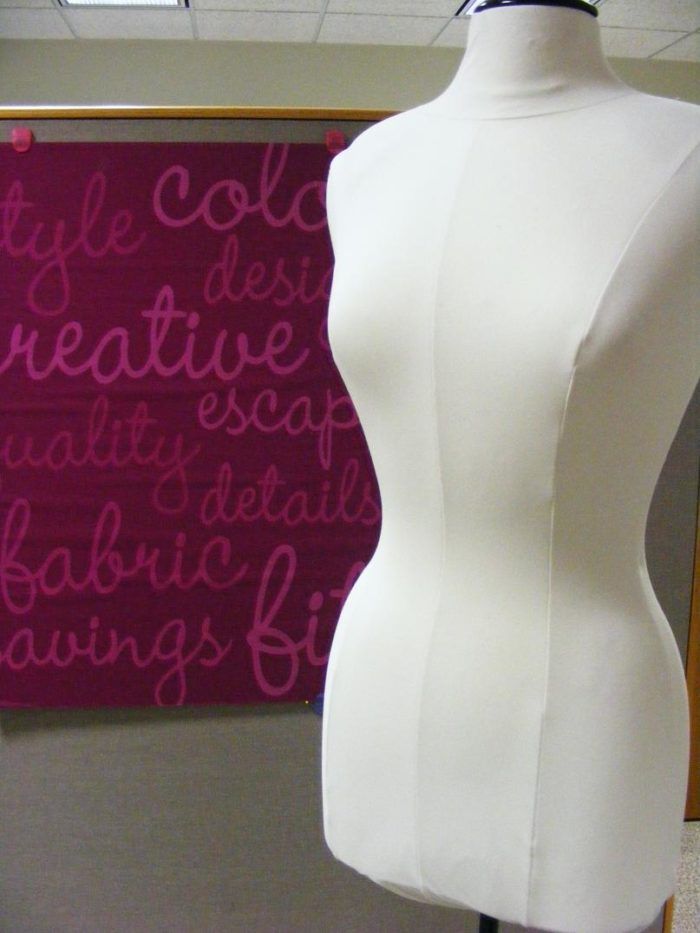
I sewed for years without a manequin/dressform. Don't do that! You need a 3-D model to drape your creations on, and you need quality tools of various types: several types of scissors, rotary cutter, cutting board, straight and curved edges, ironing ham, steamer. Visit a seamstress or take a class to learn about the latest innovations and what is necessary to work most efficiently.
After seeing Kenneth King's statement,
"you should expect to destroy several acres of fabric before you get good."
I now have a stellar excuse for my stash - I need all that fabric to ensure that I get "good" at sewing. Actually, I'm not sure if I have enough "acres of fabric". Time to run to fabric store again ;)
I graduated from design school in 1988 with a major in Fashion Design. I have worked for industry companies on and off, but found that working at small tailor & couture shops you learn the most. I get more joy out of sewing for individuals than for a large company. You have more creative freedom. Right now I have a custom design and alteration business and am my own boss. Business is booming. In the economy we live in right now, that is where the money is.....Everyone is looking into thier closets to alter what they already have. It is less expensive and unique. Spend time looking at how you can inprove on existing syles. It is a valid business in the times we live in. Also being a traveling tailor is a popular way to get clients that become regulars. I meet people at thier office to take measurements and usually get 2 or 3 more clients by the time I drop off the alterations the next time because they love the custom service. People like convenience. Be the "I can sew anything made out of fabric" kind of business person. That is what the public wants. They really don't like going to the dry cleaners for alterations. Once thay come to you, they realize all the other things you can do for them. Be confident in what you do, know the current trends and styles and NETWORK !!!! : )
Join groups and push your business through word of mouth. Offer gift certificates to your business at raffles or fund raisers to get your neame out there. Put fliers on doors in your neighborhood or at local bullitin boards or businesses.
Good luck and just go for it!
To young budding "designers" who seek a career in fashion or any other art discipline, I say make sure you include a few good business and marketing courses in your educational curriculum. It can make all the difference in developing a realistic perspective on your chosen path and ultimately, your success or failure with any entrepreneurial endeavors.
Hi There - I would totally agree with all of the above & as for the dressmaker's dummy - or stand - as we called it, get the very best you can afford & if its for yourself,(although ideally one in different sizes is good)get a smaller size than yourself & pad it up to your exact measurements. Each term at college we did this so we all had our own for the duration of our course. Interestingly I first took this C&G course at Art college, & hated working on the stand with fabric. Much later as an adult, I retook the course - with the intention of teaching afterwards- & absolutely loved working with fabric freely on a stand. I felt so much more confident with it, & also one of the adult pupils had worked at Liberty in London for years - so her input - without formal training - was brilliant. She taught the tutor more than one useful trick, as well as making our course great fun & much more interesting.
I have sewn since I was about 10 years old, so that makes over 55 years of stitching. I am so thankful that my mother helped me make garments without patterns, that I could wear to school. When I learned how to use patterns at school, I still tended to tweak them to suit myself, but never would have admitted to being a designer. I sewed many thousands of garments over the years, and supported myself for a large number of years by dressmaking. One little trick I used was to ALWAYS read the pattern guides, if there was a feature I did not know how to do, and I did not attempt to even start the actual construction until I had it down in my brain. By the time I started sewing, I had zero concerns about making an error and ruining any of a customers fabric. Another tip I always encouraged my young students, was to not be afraid to undo seams if they were not right. Taking out stitches is just as important to learn as putting them in. There is no shame in "unsewing". I can honestly say that the greatest thrill I got while running my dressmaking business, was when a client came to try on new items, and walk out with those garments on for the day!! Don't forget to do the mundane things concerning learning and practicing, and your rewards will be many.
I agree that you need to realize this is a BUSINESS. Have a business plan. Join the Chamber; join networking groups; take business & sales and maybe Internet classes through SCORE and through your chamber; always have cards with you, and always try to wear something you made.
Consider incorporating under Subchapter S or LLC.
Consider business insurance.
Keep on networking, and networking and more networking. It pays off. Don't just join the Chamber -- get on a Chamber committee. (How about the Small Business Committee)? Show up at numerous chamber functions -- especially free and low cost ones such as networking blasts.
Learn to integrate Facebook, Twitter and LinkedIn so something posted on one goes to all three. Fill out your profiles on all three, etc.
Have a ball, and sew and sew and sew! I made a stretch jacket in a class and wore it to a ladies' networking function. I have been searching for special fabrics and making these special jackets every since. I'm beginning to be brave enough to make changes to the stretch patterns I purchase. (No, I didn't attend FIT or any other sewing school, but have taught myself).
I also have a web site, geared to answering all the questions anyone receiving my business card might ask.
Professional photos are important. My signature photo is on the back of my business card, and gets a lot of attention.
Take one of these steps, then another, and don't stop. Just make sure you are leaving yourself time to sew the orders you get.
I agree with thie comment, you have to do it and put in your time and the school of hard knocks teaches you. I agree, with the comment, do more than what is expected of you in class, that is what I did. It was a passion with me and I started at age four. Art is very important because we all design and change things to our liking. I get inspiration from everything I do and see, and visit as many stores as possible. Other people might be looking at the color of a dress, sofa, tablecloth and I might be imagining something all together different. I always look at how things are assembled. I often equate it to the judging of figure skating, in order to judge skating you would have had to do those jumps yourself, because when I look at them, they all look good. I think sewing is in your DNA, but go ahead and start doing your own house, clothes, etc, people will see it and then they start asking if you will do theirs. That is how I started.