

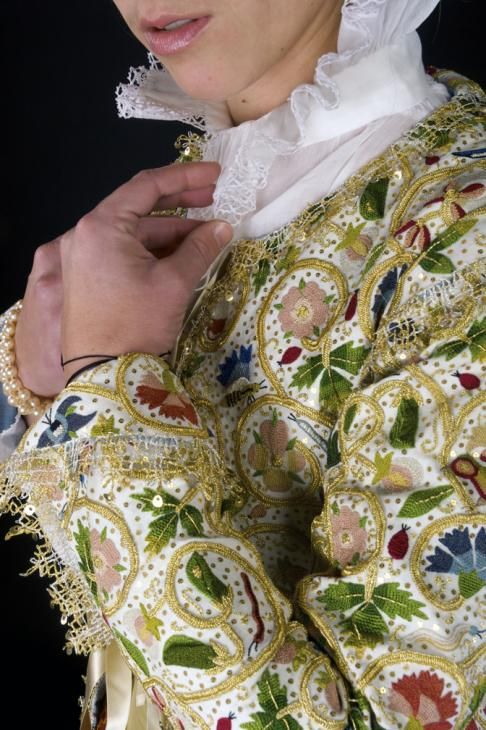
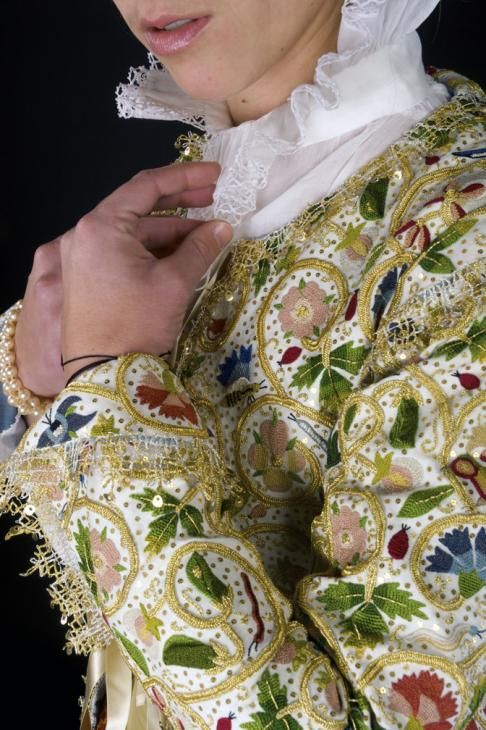
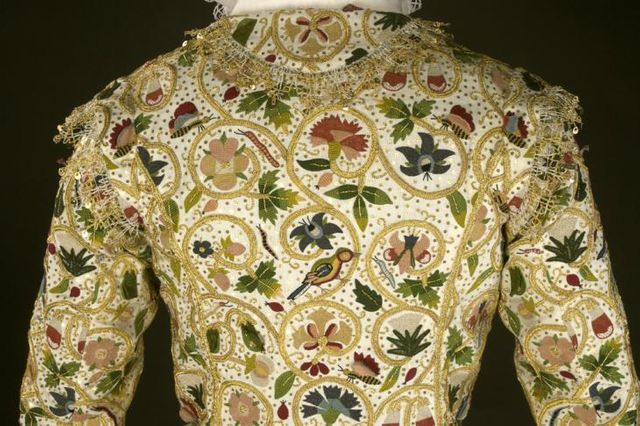
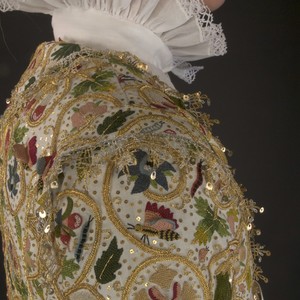
A sleeve close-up.
NORMA BUCKO VOLUNTEERED TO HAND STITCH
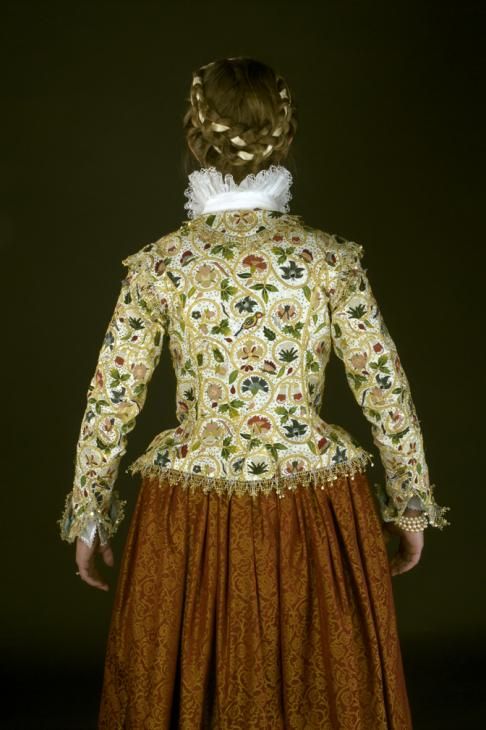
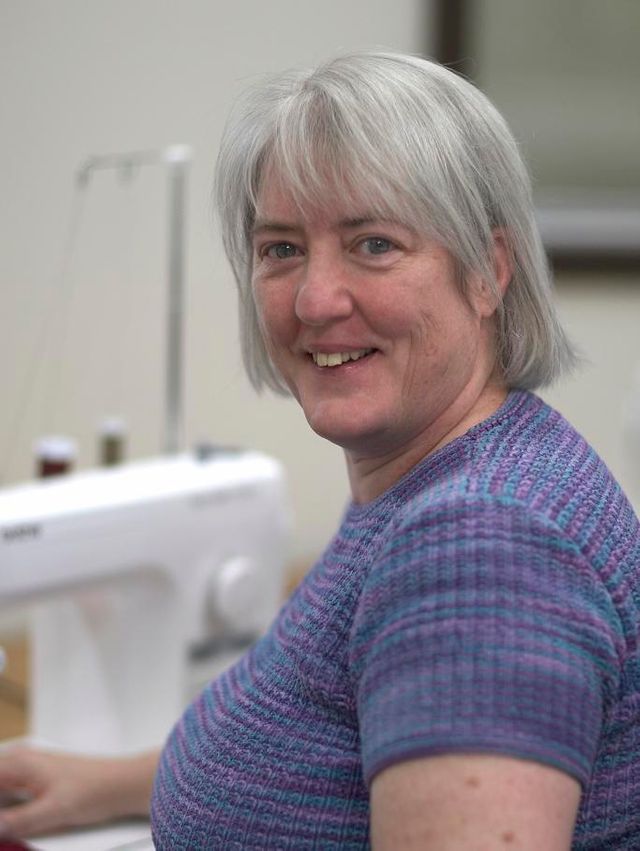
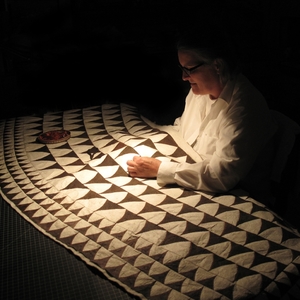
Threads staff seamstress, Norma Bucko, loves hand embroidery almost as much as garment sewing. She volunteered to work with at least 250 other people who together spent over 3,700 hours to recreate an amazing jacket from the 1620s. Norma began working on the jacket in September of 2007. Even the thread was specially produced to assure an accurate duplication of the original, and the volunteers were carefully trained to be sure the final garment was as perfect as could possibly be.
ORIGINALLY CREATED FOR PLIMOTH PLANTATION
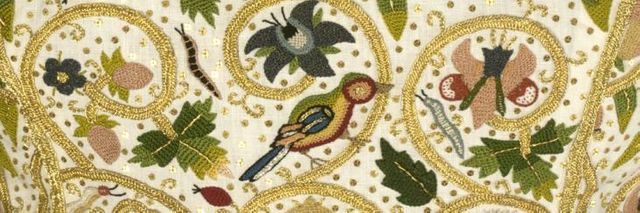
The jacket was created for Plimoth Plantation in Massachusetts, but it is currently on loan to the Textiles Gallery at Winterthur Museum, Library and Garden in Wilmington, Delaware. It will be on display through August 2011. Actually, the jacket isn’t an exact reproduction. Rather, it was re-created from two examples located in the Victoria and Albert Museum in London. One example was chosen for the cut and construction of the jacket, and the other for the design of the embroidery. Both originals date to the 1620s.
THE JACKET CREATION LED TO INTERESTING DISCOVERIES
In the 1600s this type of embroidery would have been done in a professional workshop. The creation of the Plimoth Jacket has led to discoveries about the technology for making threads and spangels as well as about stitching techniques. The project also resulted in important insights into 17th century workshop practices, during which large numbers of embroiderers (both highly skilled laborers and apprentices learning their trade ) would work together to create expensive and decorative clothing similar to the Plimoth Jacket.
THE ENTIRE JACKET WAS DONE BY HAND
The sewing, embroidery, and lace found on the jacket were all done entirely by hand. The tear-drop shaped sequins hanging from the hand-stitched lace were created using tools made specifically for the project. The tools and techniques replicate those from the 1600s. Even the lining was hand-woven and dyed with natural indigo.
LET US KNOW IF YOU VISIT THE DISPLAY
The Threads staff is proud of Norma’s contribution. If you’re able to attend this display, please tell us about it!










This is incredible! I would like to hear from Norma, what the process, and experience was like. Any plans to do an aritcle in the magazine?
Norma wrote a blog post on this a while back, when she first finished the project. Here's the link again:
https://www.threadsmagazine.com/item/11026/embroidered-jacket-at-plimoth-plantation
This is Norma, one of the volunteers that helped to embroider the jacket. You can read my blog post, follow the link listed above in Deana's comment. I really enjoyed the experience. It was like nothing I had done before! At the time, I owned a portion of a house on Cape Cod, so Plymouth was about a 45 minute drive. Most of the sessions I attended were 4-day weekends. I believe I attended five sessions. It was fascinating to meet other embroiderers, and fun to work on something that so many eyes will see! I also have dabbled in bobbin lace, which was how the lace with the spangles was created, so I did a small amount of lace making while I was there. It was interesting to work in a workshop environment, where everyone was working towards the same end. I was also at the last workshop, when the embroidery was finished. What a celebration! I will never forget this, and will be telling my grandchildren and great-grandchildren about this experience as well!
I've seen photos of that jacket before, on a blog created to chronicle the work. It is indeed impressive.
For the record, I hate the term "seamstress." I think it is sexist and dated. I understand that not everyone shares this view. But it is my view, and seeing it used is an immediate turn-off.
I prefer "sewer," or "sewist," if the focus is on the act of sewing.
The work of Norma and her fellow sewists is incredible. What an honor to work on such a garment. Tell us more!
The Winterthur Museum link has an amazing pdf at the bottom of the page about how the jacket was designed and created. It is absolutely stunning and inspiring, thank you so much for sharing this!
Having visited Plimoth Plantation, albeit quite a few years ago, I find it hard to believe that the women who came over wore such a jacket. I have always thought that people of that era dressed rather sedately. Nice work, though.
I did go to the PDF what great info. Would love to learn the stitches for a few things I am working in. There was one in particular that was a braided matalic thread and it was used to cover the seams. What a beautiful piece of work made with a loveing effort.
From what I am able to see on the web posting I can only describe the jacket as a magnificent labour of love. Joanne
To reply to nancye, it would not be something that the women at Plimoth would have worn. The people that came here and lived in Plimoth would not have had the funds to pay for such a jacket. The jacket represents a garment that the upper class in England would have worn at the time period that the colonists first arrived. Jackets such as the one we created were made in workshops, where several people would be working on the embroidery.
And for jestersmother, the stitch that you are talking about is plaited braid. Here is a link to the post in which Tricia Wilson Nguyen (the leader of the jacket project) talks about how to get the instructions for the stitch.
http://thistle-threads.com.mytempweb.com/blog/index.php/2008/07/how-to-get-the-directions/
The plaited braid was used for the vines as well as for covering the seams of the jacket.
http://www.lv-designer-handbags.net/ Louis Vuitton Mini Lin
http://www.louis-vuitton-replica-handbags.us/ Louis Vuitton Replica
http://www.replica-handbags.us/
This jacket is gorgeous. I have seen Margaret Laton's jacket at the V&A Museum in London. It is wonderful to get a feel for how it would have looked when it was new. It really shows you how much they loved colours and 'bling'!
http://www.hermeskelly4u.com/ Hermes Kelly Replica
This is awesome
Great display .. Really good work